Skip to main content


Nutrition
Nutrition Habits for Water Polo Athletes: The Complete Guide
A complete water polo nutrition guide for athletes and parents: daily carbs, protein, and fluid targets, a sample day of eating, tournament fueling, recovery, and the mistakes that cost energy late in games.
Brittany VanderGroef · Strength & Conditioning Coach
Updated Published 10 min read
What changed: Updated protein and carbohydrate targets to the current sports nutrition position stand, clarified recovery timing, corrected athlete names and honors, and removed a download we could not deliver. Suggest an update
Sources
Common questions
What should a water polo player eat before a game?
Eat a meal with carbohydrates and some protein 2 to 3 hours before a game, such as oatmeal with fruit, a turkey sandwich, or pasta with lean protein. Avoid high-fat or high-fiber foods that can upset the stomach.
How many calories does a water polo player need?
It varies widely with age, size, growth, and training volume. Many hard-training teenage players need 2,500 to 4,000 calories a day or more. Steady energy, recovery, and growth are better guides than a single number, and a registered sports dietitian can help.
How much protein does a water polo player need?
About 1.2 to 2.0 grams per kilogram of body weight per day, spread across meals. For a 64 kg (140 lb) athlete, that is roughly 77 to 128 grams.
Is creatine safe for water polo players?
Creatine is one of the most studied sports supplements for adults. Athletes under 18 should focus on food, fluids, and sleep first and talk with a doctor or registered dietitian before taking any supplement.
About the author
Brittany VanderGroef · Strength & Conditioning Coach
Brittany is a Division I strength and conditioning coach who specializes in water polo training. She leads the Prep2PlaySports strength and nutrition guides and teaches athletes how to build the physical base the sport demands.
View mentor profileSee something you disagree with or that needs updating?
We check these guides against official sources and update them when rules or numbers change. Tell us what to fix and we will review it.
Want direct advice from D1 athletes and coaches?
Get practical recruiting, nutrition, and performance guidance built for water polo. Download a guide or book a free call with our team.
Continue learning
Nutrition · 6 min read
Hydration for Water Polo Athletes: How Much to Drink and When
Water polo players dehydrate without noticing because the pool hides sweat. Here is how much to drink, when to add electrolytes, and what Division I players do every morning.
Read articleNutrition · 6 min read
Why Carbs Are a Water Polo Player's Secret Weapon
Why carbohydrates fuel sprinting, eggbeater, and late-game decisions in water polo, how much a training athlete needs, the best food choices, and why low-carb diets backfire.
Read articleNutrition · 6 min read
Fueling for Tournaments: How to Stay Energized and Recover Fast Between Games
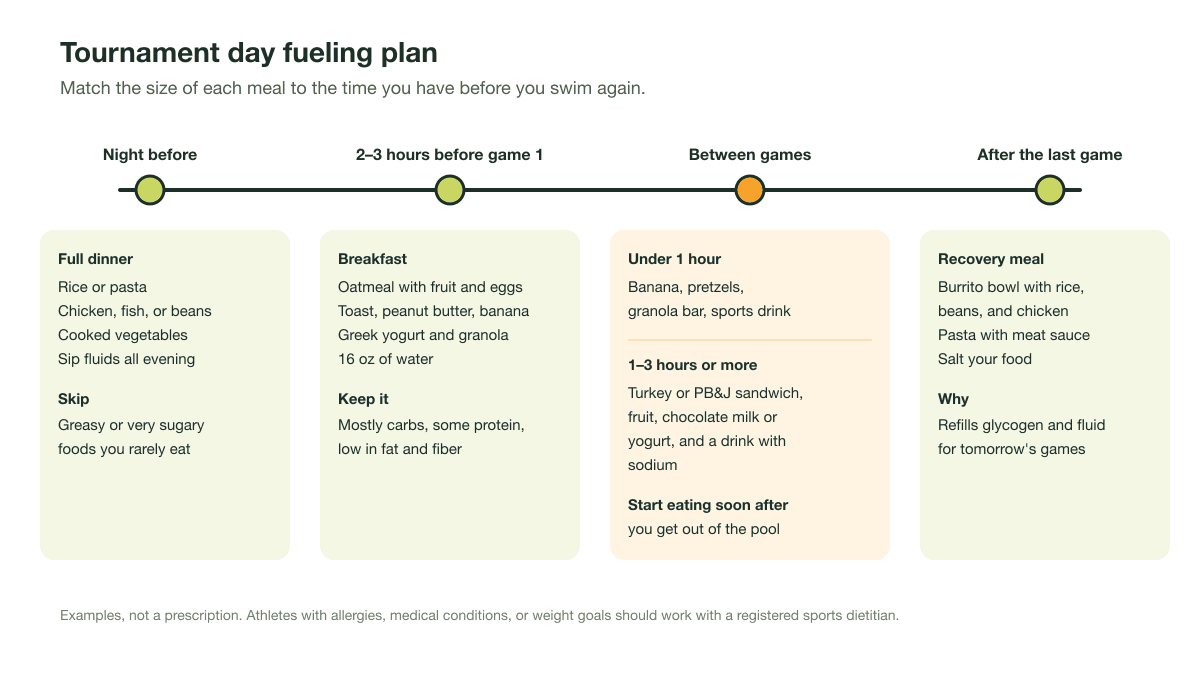
A water polo tournament day nutrition plan: what to eat the night before, the morning of, between games, and after the last game, plus a cooler packing checklist.
Read article